Evaporative cooling during Australian water restrictions
Restrictions are staged, local and changeable. Some regimes have exempted coolers; bleed waste and rainwater still decide whether the machine is decent in a drought.
Published 1 September 2025 · Updated 3 February 2026
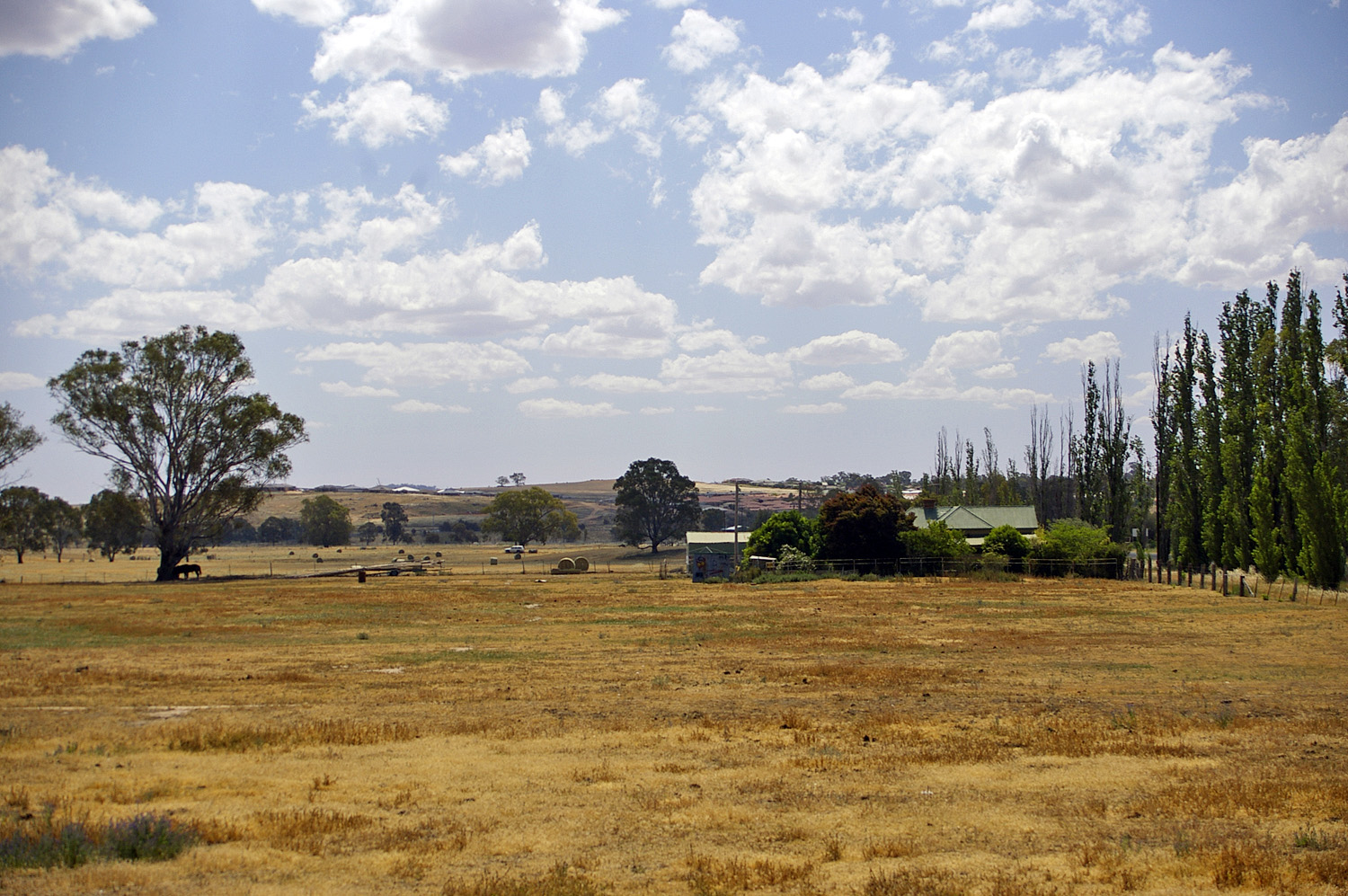
Drought makes an evaporative cooler politically visible. The same machine that is a quiet roof appliance in a wet spring becomes a tap on the skyline when the paddocks go grey. Australians have lived through enough restriction summers to know the pattern: outdoor watering is first to go, then fountains, then the arguments about pools, then someone looks up at the cooler and asks whether comfort is a legitimate use of a scarce litre.
The answer is never national. It is a stage, a utility, a date, and a sentence in a PDF that will be rewritten when the storages move. The useful work is to understand how those stages are built, what exemptions have sometimes existed, where bleed-off sits on the ledger, and whether a tank changes the ethics as well as the bill.
Restriction stages are local instruments
Australian urban water restrictions are typically staged. Early stages cut daytime sprinklers and shorten watering hours. Later stages ban irrigation, limit hoses, and start naming appliances. The names differ — Perth, Adelaide, Melbourne and the inland towns have not used one script — but the logic is the same. Easy outdoor uses go first. Indoor health and hygiene are protected longer.
An evaporative cooler sits awkwardly on that ladder. It is an indoor comfort system that consumes outdoor-grade volumes. NSW Planning’s planning band of about 10 to 30 litres an hour looks modest until you meet Water Corporation’s Perth figure: around 100 litres an hour can evaporate in hot weather. CHOICE’s cited 2009 study put Adelaide in a 67 to 116 litre-an-hour band. Those litres leave the house as vapour. They do not return to the reservoir.
Because the machine is also how many households stay in the house on a 44-degree afternoon, some restriction regimes have treated evaporative coolers as a permitted use, or as a use with conditions, while banning the sprinkler beside them. Other notices have asked people to reduce hours, to maintain bleed at a minimum, or to prefer alternative cooling. A few places, in harder stages, have restricted or discouraged evaporative use. None of that is stable enough to memorise. The current page from your water authority is the only document that matters on a given Tuesday.
If you are new to a city, do not import last decade’s Melbourne stage three into this year’s Perth or Broken Hill. The storages, the desalination plants, and the politics are different.
Exemptions that sometimes exist
Exemptions, when they appear, are usually framed as health and reasonable indoor cooling, not as a right to run the machine from breakfast to midnight. They may require a well-maintained unit, a working bleed that is not a waste pipe, or a ban on using cooler discharge to dodge a watering ban.
Read the exemption as a lawyer would, not as a neighbour would. “Evaporative air conditioners may be used” is not “leave every ceiling vent open and the bleed aimed at the nature strip”. If the notice is silent, do not invent a permission. Ring the utility. The person who writes the stage notices is used to the question.
Portable coolers in a single room are a smaller draw and sometimes escape attention that a rooftop ducted unit attracts. They are still scheme water if the jug is filled from the tap. Wall and window units sit in between. None of them is invisible on a meter.
Bleed waste is the part you can actually govern
Evaporation is the cooling. Bleed is the maintenance. Water is bled from the tray so minerals do not concentrate until the pads glaze and the pump dies. Typical bleed on older systems is 11 to 20 litres an hour. Newer controls can run near 3 litres an hour. Water Corporation’s check — a bucket half full in 30 minutes, about 11 litres an hour — is a decent field test.
During a restriction summer, an unmeasured bleed is the first thing that looks like waste, because it is waste in the ordinary sense: water that did not cool a person. It may still be necessary. Shutting it off to appear virtuous will scale the pads, cut cooling, and push you toward longer hours or a technician. That is a poor drought strategy.
Measure it. Keep it at the low end of the range that still protects the tray. Point the hose at a tree that is allowed to be watered, a pot, or a tank, if the rules allow reuse. Do not use bleed as a grey loophole to irrigate a lawn that the stage has banned. That is how coolers lose their exemption the next time the committee meets.
The longer treatment of water quality, scale and bleed-off is the workshop version. The restriction version is: know the litres, write them down, and be able to explain them.
Rainwater tanks change the source, not the physics
A tank does not make evaporation free. It makes the litres yours. Households that plumb a cooler to rainwater take pressure off the scheme and often get softer water, which is kinder to pads. In a drought the tank is also emptier. A hard January can drain a modest tank just when the house needs the machine.
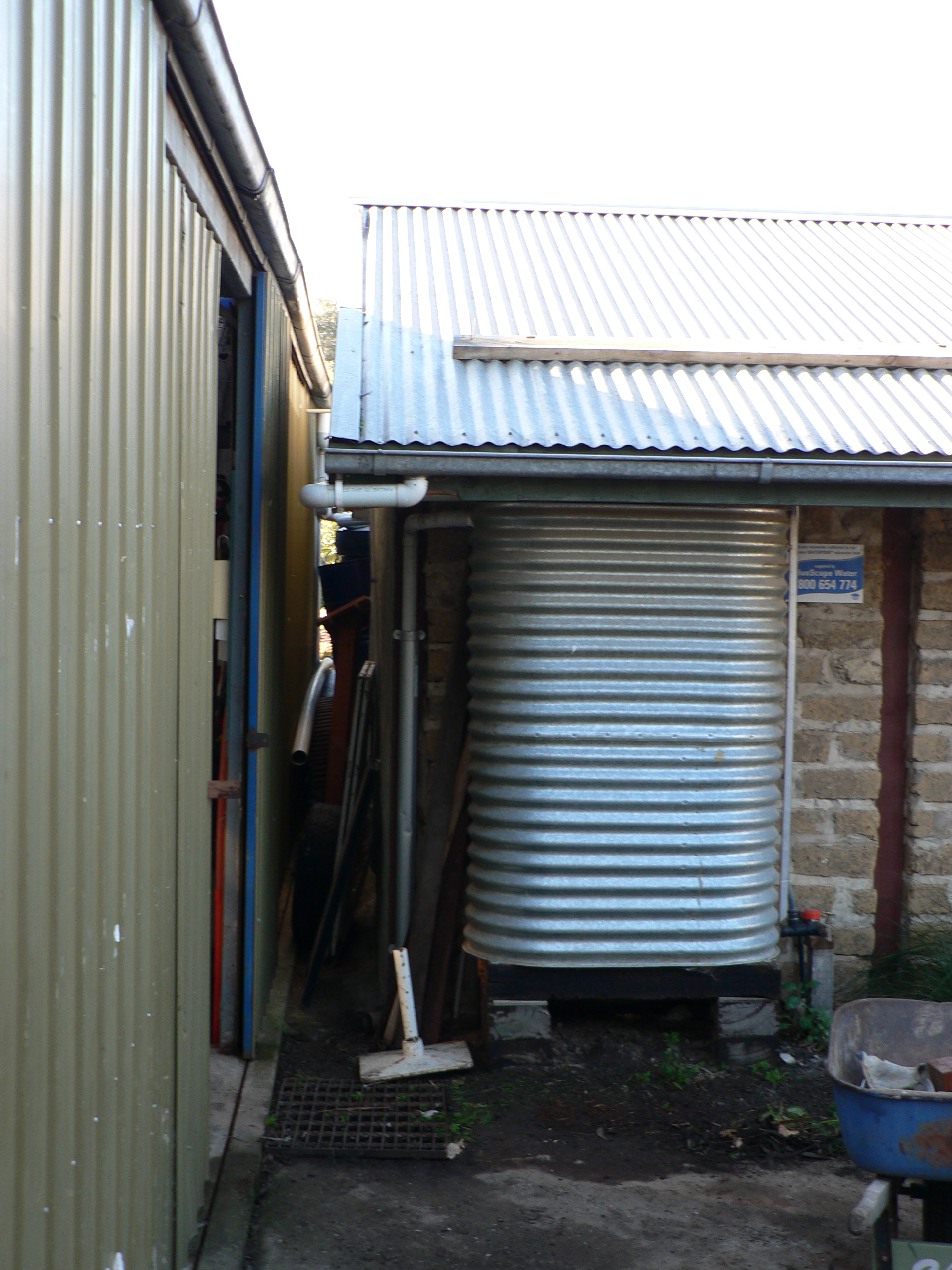
If you go this way, screen the inlet, keep organic muck out of the pump, and decide in advance what happens when the tank runs low: switch to mains if the restrictions allow it, shorten the hours, or shut the water off and run the fan. A cooler that sucks a tank dry and then sits there is not a plan.
Tank water used for cooling is still a household allocation in the ethical sense. Neighbours on tanks are not outside the drought. They have just moved the argument from the reservoir to the roof.
The ethics of cooling in a drought
There is a version of this debate that treats any comfort as decadence. It is not a serious version. Heat kills. Dry inland towns — the NSW slopes, the Queensland west, the Adelaide plains — were built with verandahs and, later, with wet pads on the roof because the alternative was a house you could not occupy in the middle of the day.
There is another version that treats the cooler as a birthright that water policy must not touch. That is not serious either. A machine that can evaporate 100 litres an hour is a water appliance. Hours matter. Empty rooms matter. An uncovered unit that also leaks all winter is a hole in more than the roof.
The decent position is narrower. Use the cooler when the air is dry enough to make evaporation worth the litre. Shut it down on humid days and on smoke days. Close vents to unused rooms. Keep pads and bleed honest so you are not running longer to compensate for a clogged face. Shade the west glass and insulate the roof so the machine is not fighting a tin oven; that work is in insulation, shading and passive cooling. Price the water as well as the power, as the running-cost essay sets out.
If a stage bans or limits the machine, comply. If an exemption exists, use it without turning the bleed into a secret sprinkler. If you can shift some of the load to a tank, do that before the storages become a press conference.
Drought does not make evaporative cooling immoral. It makes the litres visible. A household that can say how many hours it ran, what the bleed measured, and which notice it followed is already doing the adult version of the argument. The rest is weather, and the weather does not negotiate.
Frequently asked
- Can I run an evaporative cooler during water restrictions?
- Sometimes yes, sometimes only with conditions, sometimes no. Australian restriction stages are set by water utilities and state rules, and evaporative coolers have at times been exempt as indoor cooling. Read the current notice for your suburb, not a memory of the last drought.
- Does bleed-off count as wasting water?
- Bleed is meant to keep minerals from concentrating in the tray. It is still water leaving the system without cooling the house. During restrictions, measure it, keep it in the published 11–20 litre-an-hour band unless you have a newer low-bleed control, and put the discharge somewhere useful if the rules allow.
- Can I run a cooler from a rainwater tank?
- Many households do. Tank water can spare the scheme supply and is often softer than Perth or Adelaide mains. Keep the tank screened, the supply filtered enough to protect the pump, and a mains backup if a dry spell empties the tank mid-January.
More from Costs
Costs · 15 September 2025
Insulation, shading and making evaporative cooling work harder
A cooler cannot outrun a dark tin roof and west glass. Bulk insulation, pelmets, roof colour and night purge decide how many hours the pads must work.
Costs · 18 August 2025
Evaporative cooling running costs: electricity, water and the summer bill
The fan is cheap. The water is the argument. Published Perth and Adelaide figures show how to estimate a household summer without inventing a tariff.