Evaporative cooler maintenance: pads, pumps and the pre-summer service
A rooftop cooler that skips its annual service will leak, smell, waste water and blow warm air when the first heat arrives. The work is ordinary and it has a season.
Published 9 June 2025 · Updated 3 February 2026
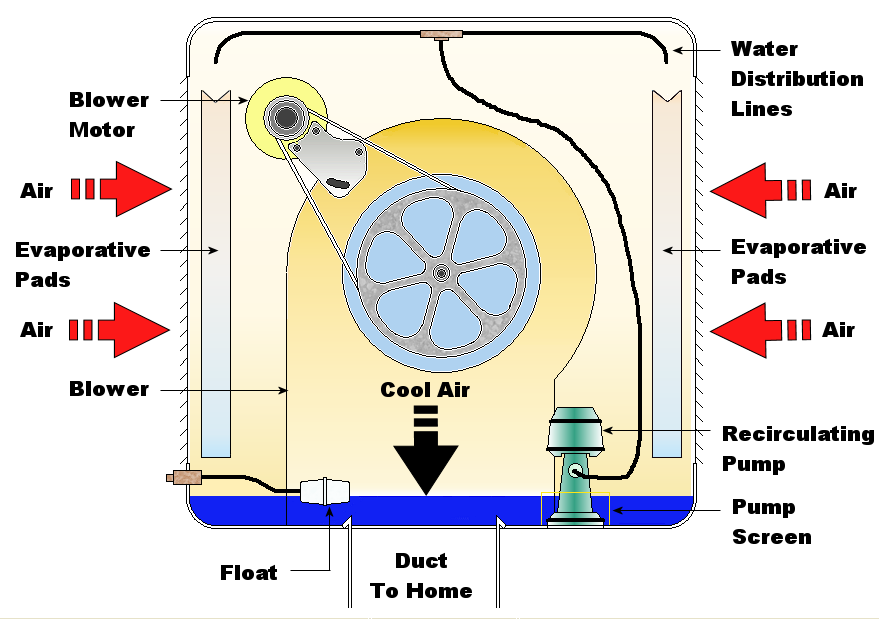
A ducted evaporative cooler is a shallow pond, a pump, a set of wet pads and a fan on the roof. Leave that assembly alone for a year and it will still look like a cooling system. It will not act like one. Pads glaze. The pump starves. The bleed hose either floods the gutter or sits dry. The first heatwave then becomes a diagnostic session at the worst possible time.
The pre-summer service is not a product upsell. It is the difference between a machine that still matches how evaporative cooling works and a roof ornament that smells like a wet dog. Do it in spring. Do it before you need the cold air. Southern households usually mean September or October. Inland Queensland can start earlier. The calendar follows the heat, not the public holidays.
What the annual service actually is
Climb safely or pay someone who will. Isolate power. Take the cover off and look, which is the step glossy brochures skip. The tank should be reasonably clean, not a swamp of silt and mosquito larvae. The pump should be submerged, unblocked and willing to prime. The pads should be intact, not torn, not rigid with scale, not dry on one face and sodden on another. The water inlet should shut off when the tank is full. The bleed or dump arrangement should be doing something measurable.
Run water into the tank and watch. A leak at a fitting now is a stain on a ceiling in January. A float valve that sticks open is an overflowing tank and a water bill that looks like a pool. A float that sticks shut is a dry pad and a fan blowing hot outdoor air through the house, which some people then describe as the cooler "not working" as if the climate had changed overnight.
While the cabinet is open, check the fan for debris, bird nests and the sort of imbalance you can hear from the driveway. Listen once you restore power. A clean, wet-pad system has a sound. A failing bearing or a blade kissing the shroud has a different one. Do not ignore the second.
Manufacturers in the Australian market — Bonaire, Braemar from Seeley International, Climate Technologies — publish service notes for their own cabinets. Follow the one that matches the unit on your roof. The physics is shared. The screws, pad frames and control boards are not.
Pads: clean, wet, replace
Pads are the working surface. Air has to pass through them. Water has to wet them evenly. Scale, dust, algae and collapsed cellulose all reduce the area that can evaporate. Cooling falls away even on a perfect dry day in Perth or the inland. The house then feels as if the climate had turned coastal overnight.
Light clogging can sometimes be rinsed. A garden hose, gentle, from the clean side, will shift dust. Aggressive blasting will tear the pad and leave channels where air bypasses the wet media. If the pad is white and stiff with mineral crust, rinsing is theatre. Replace it. Replacing cooler pads is ordinary seasonal work in hard-water districts, often every one to three summers. Softer water and a competent bleed can stretch the interval, but only if the pads stay evenly wet and do not smell.
Smell is information. A musty cabinet at start-up means organic growth in a dark, wet box that has been sitting since April. That air is about to be delivered to every room. Clean the tank. Replace pads that have gone sour. Do not run the system as a way of "airing it out" over the children's beds.
Uneven wetting is the other quiet failure. If the distributor is blocked, one pad runs dry and the others flood. Dry streaks are visible if you look. Air takes the easy path through the dry section, and the cooling you paid for never happens. Clear the distributor tubes. Confirm the pump is actually moving water to the top of the pads, not just humming in a puddle.
Pumps, leaks and the tank
The pump is a cheap component until it fails on a Saturday in January. Feel for debris in the strainer. Confirm it is fully in the water. A pump that runs dry will die; a pump that is air-locked will sit there making a noise that sounds like work. After a winter drain, priming is part of the spring ritual. If the pump has seized, replace it. This is not a character-building exercise.
Leaks come from split hoses, cracked fittings, a tank rusted at a seam, or a cabinet that no longer sits true on the roof curb. Water in the ceiling space is a maintenance failure with extra steps. Catch it in spring when the stain is small. The inlet solenoid, where fitted, should close. If it does not, the tank will overflow the moment the power is on and the tap is live.
Overflowing is not the same as bleed. Bleed is a controlled dump. Overflow is a fault. If water is pouring from the overflow spigot whenever the unit runs, the float is wrong, the dump valve is stuck, or someone has opened a drain and forgotten it. Fix the cause. Do not treat the overflow as a watering system for the garden unless you enjoy surprise accounts from the water utility.
Bleed setting, the bucket test and Water Corporation advice
Bleed exists because evaporation leaves minerals behind. Without a dump, the tank concentrates into a brine that scales pads, chews pumps and smells. Older systems often bleed 11 to 20 litres an hour. Some newer designs claim around 3 litres an hour. Water Corporation in Perth has a household test that does not require a flow meter: a bucket half full in 30 minutes is about 11 litres an hour.
Do that test. Put a bucket under the bleed hose, run the cooler as you would on a hot afternoon, and time it. If the bucket fills like a tap, you are paying to water the roof cavity. If nothing arrives, the tank is concentrating and the pads will crust. Adjust within the range the manufacturer allows. Do not pinch the bleed to zero because a neighbour said it saves water. It saves water the way not changing engine oil saves oil.
Perth figures are the ones Australian utilities have been willing to put on paper. Around 100 litres an hour can evaporate in hot weather; at six hours a day for 50 days that is around 30,000 litres a year, before you argue about bleed. CHOICE, citing a 2009 study, reported 41 to 70 litres an hour in Hobart and 67 to 116 in Adelaide. Your inland New South Wales afternoon will usually sit closer to the NSW Planning band of about 10 to 30 litres an hour. The service implication is the same everywhere: evaporation is the point, bleed is the tax, and an unmeasured tax will either scale the machine or empty the meter. The electricity and water running costs only make sense if both of those flows are known.
What you can leave to a technician
Electrical faults, a cracked roof curb, duct leaks in the ceiling, and a control board that has given up are not Saturday jobs for a household that does not already live on roofs. Pad replacement, a pump swap, a bleed adjustment and a tank clean often are, if access is safe and the power is isolated. The line is competence and height, not pride.
A technician who "services" the unit by changing the pads and leaving a blocked bleed, a jammed float and a winter cover in the gutter has not serviced it. Ask what they measured. Ask whether they ran water. The useful visit is the one that leaves the cabinet able to wet, dump and blow without drama.
Do the spring service even if last summer was mild. Pads do not care that you went away in January. The tank still sat. The pump still seized in the last of the water. Pre-summer is a date on the calendar, not a mood. When the first dry heat arrives, the house should already be able to breathe through wet pads, not through a maintenance backlog.
Frequently asked
- When should I service an evaporative cooler?
- Before the first real heat, usually September or October in southern Australia. Check pads, pump, bleed, tank and the winter cover. Do not wait until a 40-degree afternoon to find a seized pump.
- How often do cooler pads need replacing?
- In hard-water districts many households change pads every one to three summers. Soft-water, well-bled systems last longer if the pads stay clean, evenly wet and free of scale.
- What is a bleed setting and why does it matter?
- Bleed-off dumps a little tank water so minerals do not concentrate. Older systems often run 11 to 20 litres an hour; some newer ones are around 3. A bucket half full in 30 minutes is about 11 litres an hour.
More from Care
Care · 4 August 2025
When and how to replace evaporative cooler pads
Pads do the cooling. Scale, dry streaks and a sour smell tell you they are finished long before the cabinet looks tired.

Care · 21 July 2025
Water quality, scale and bleed-off rates
Bleed-off exists to stop the tank turning into brine. The difference between 11 to 20 litres an hour, 3 litres an hour, and a hose that fills a bucket like a tap is the difference between clean pads and a wasted meter.
Care · 7 July 2025
Troubleshooting a weak, noisy or leaking evaporative cooler
Most rooftop failures are ordinary: dry pads, a blocked filter, a dying pump, a fan out of balance, a tank that overflows, or a musty smell from a cabinet that sat wet all winter.