Evaporative cooling in Perth and the WA wheatbelt
Dry easterlies still make Perth evaporative country. Water Corporation’s figures, the Fremantle doctor, hard water and goldfields bleed-reuse habits decide whether the rooftop unit remains a bargain.
Published 17 March 2025 · Updated 3 February 2026
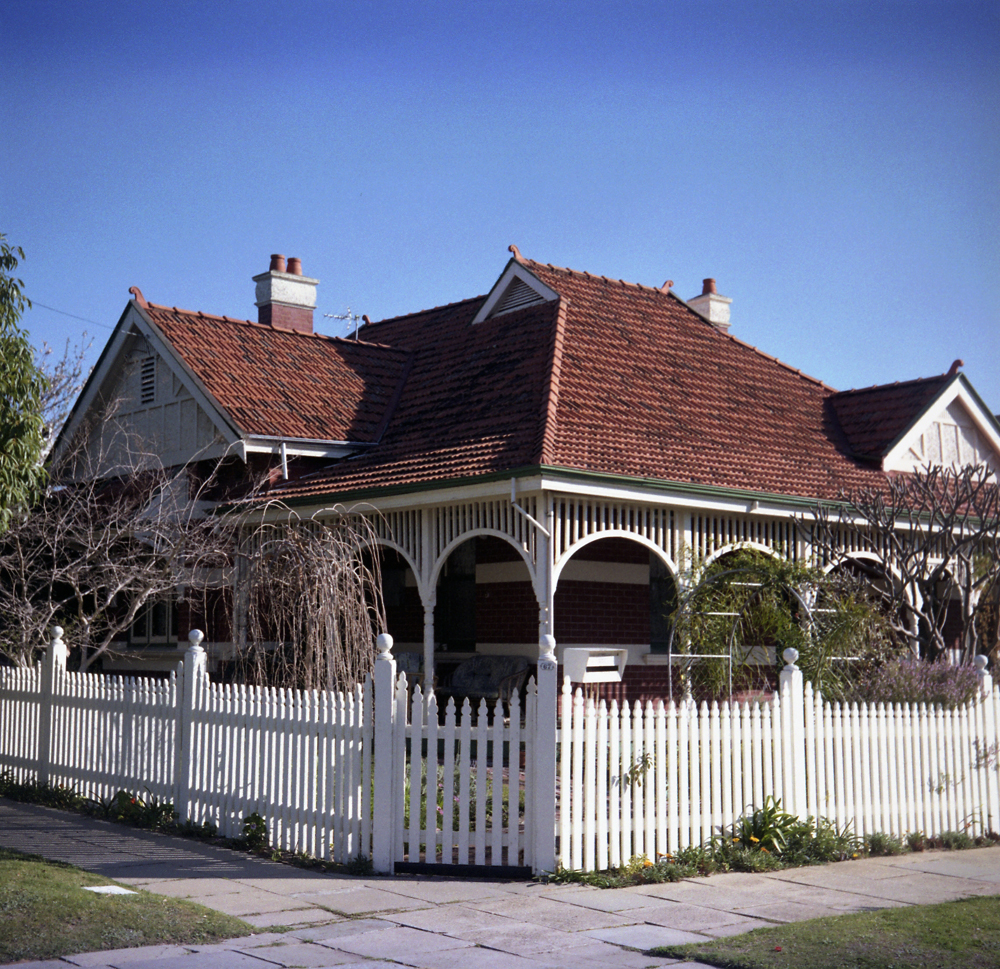
Perth is the Australian city that still treats a rooftop evaporative cooler as ordinary. The reason is not loyalty. It is the easterly. For much of summer the inland air arrives dry, the wet-bulb sits well below the dry-bulb, and a wet pad can take a brick house from harsh to liveable without a compressor. The wheatbelt and the goldfields run the same physics with fewer sea-breeze complications and harder water.
That does not make the machine free, or automatic. Water Corporation has been blunt about the litres. The afternoon wind can cancel the advantage. Scale from the coastal plain will cake a pad that looked fine in September. None of that is a reason to rip a working unit off a Midland roof. It is a reason to run it as a climate system, not as a set-and-forget air conditioner.
If you need the national picture first, where evaporative cooling works sets the bands. This essay is the west-coast case.
Easterlies, the doctor, and the shape of a Perth day
A typical hot Perth day has a plot. Overnight, air drains off the inland. Morning can already be warm and dry. The easterly through late morning and early afternoon is when a pad does its best work: high temperature, low humidity, a real depression. Houses that open on the south and west, and keep the pump on, feel it.
Then the Fremantle doctor arrives — the afternoon south-westerly off the water. Temperature falls. Humidity rises. The wet-bulb gap closes. A unit that was heroic at 1 pm becomes a moist fan at 4 pm. People blame the pads, the installer, the brand. They are arguing with the Indian Ocean.
The useful response is operational, not mechanical. Run the water when the air is dry. When the doctor is in, open the house to the breeze and consider fan-only, or switch the thing off and let the change do the work. Fighting a cool, moist wind with more pump is how a hallway goes clammy.
Fremantle, Cottesloe and the immediate coast feel the doctor earlier and harder than Midland, the hills or the eastern fringe. A house in York or Northam may barely see it. Sizing and expectations should follow that gradient, not a single “Perth” sticker.
Water Corporation’s numbers
Water Corporation has published the figures everyone quotes, and they are still the right ones to start from: around 100 litres per hour can evaporate in hot weather, and about 30,000 litres a year if you run six hours a day for 50 days. Those are not a meter reading for your street. They are an order of magnitude from the utility that sells the water.
NSW Planning’s coastal-leaning range of about 10–30 litres per hour is the other public number, and it describes a different humidity. Perth in an easterly is not that climate. If your bill looks closer to the Water Corporation picture, the machine is probably doing what the climate asks. If it looks wildly higher, look at bleed, leaks and a float that is stuck open before you blame evaporation.
Bleed-off is the quiet extra. Older systems often dump 11–20 litres per hour so salts do not crust the pads; newer water-management kits can be closer to 3. Water Corporation’s check — a bucket half full in 30 minutes, about 11 litres per hour — is a practical test on a single drain. A hose that fills a bucket in five minutes is not bleed. It is a fault.
Put water and power on the same page. Electricity for the fan is usually the small line. The litres are the argument, especially in a drying south-west. Running costs are a water story in this city more than a kilowatt story.
Hard water on the coastal plain and inland
The Swan Coastal Plain is limestone country. Kettles fur. Pads do too. A distributor that was even in November will streak by February if bleed is timid and the media is never hosed. Hills suburbs on different schemes, and almost any wheatbelt or goldfields town on hard or bore-leaning supply, see the same crust earlier.
Pad life is a water-quality number as much as a brand number. Inspect every spring. Budget to replace more often than a brochure’s “several seasons” if your tap water leaves rings. A water-management system is not an upsell in this geology; it is how you stop buying pads as a hobby.
Winter cover and closed ceiling vents still matter in a mild Perth winter. The rains are enough to fill an open cabinet with leaves and to keep pads damp. Mould in a roof unit is a maintenance failure, not a climate surprise.
The wheatbelt and the goldfields
East of the metropolitan scheme the air is generally drier and the summer harder. Northam, Merredin, Narrogin, Esperance’s hinterland and the goldfields towns still run evaporative plant on houses, pubs and sheds because the wet-bulb allows it. Kalgoorlie–Boulder is the sharp end: heat, hard water, a long industrial memory of making water do two jobs, and a culture of putting bleed where it is not wasted.
Bleed reuse onto a garden, a tree line or a non-potable tank is ordinary inland practice. It is also how a household stays on the right side of restrictions and courtesy without pretending the cooler uses no water. Keep it off the drinking supply and off leaf crops you eat unwashed. Make the drain a decision — a buried line, a tank, a mulched bed — not a waterfall down the next corrugated roof.
Sheds and workshops in the wheatbelt are often better evaporative candidates than a sealed metro renovation. Doors already open, volume is high, and the alternative is still air under hot iron. The same rules apply: relief at the far end, pads on a roster, and no wet pads on a smoke day.
Restrictions, tanks and the habit of noticing
Perth remembers sprinkler rosters. A cooler that leaks, bleeds without control or runs all night on a mild week will attract the wrong kind of attention — from the meter if not from a neighbour. A rainwater tank does not make evaporation free; it moves the litres off the scheme. If the tank is also the garden, do the arithmetic before you promise both.
Fifty days at six hours is Water Corporation’s illustration, not a law. Some summers you will run less. A heatwave fortnight can concentrate a lot of that annual figure into two ugly weeks. Read the meter at the start and end of a hot spell once, so the argument in your head has a number.
Do not run the unit for bushfire smoke. The west has those days too. Outdoor air is the point of the system; smoke is not a cooling medium.
A Perth or wheatbelt house with shade, insulation, openable windows and a serviced pad bank still has one of the better evaporative climates in the country. The doctor will take the afternoon off your hands if you let it. The easterly will do the morning if the pads are wet and the bleed is honest. That is the whole local method.
Frequently asked
- How much water does an evaporative cooler use in Perth?
- Water Corporation has put the hot-weather evaporation rate at around 100 litres per hour, and about 30,000 litres a year if you run six hours a day for 50 days. Your house will differ with humidity, pad condition and bleed. Treat those figures as an order of magnitude, then read your own meter.
- Why does my Perth cooler feel weak after lunch?
- The morning easterly is dry and the pad has work to do. The Fremantle doctor is a cooler, moister south-westerly. When it arrives, the wet-bulb gap shrinks and the same unit becomes more fan than cooler. Open the house to the breeze, or switch to fan-only, rather than turning the pump up.
- Can I reuse bleed water in Kalgoorlie or the wheatbelt?
- Many inland households already run bleed onto a garden or a non-potable tank. That is a local water habit, not a reason to close the bleed. Unbled pads salt up. Keep the water off food plants and make sure the drain is intentional, not a stain on the next roof.
More from Climate
Climate · 26 May 2025
Humidity, wet-bulb temperature and fan-only mode
When outdoor air is already holding water, wet pads stop cooling and start humidifying. Kill the pump, feel the change, and wait out a storm-front afternoon.
Climate · 12 May 2025
Evaporative cooling in Queensland: dry inland versus the coast
Longreach, Roma and Toowoomba can still justify a wet-pad cooler. Brisbane, Cairns and the wet-season coast generally cannot.

Climate · 28 April 2025
Evaporative cooling in inland New South Wales
Why Dubbo, Wagga Wagga, Orange and Broken Hill still suit wet-pad cooling, and why the same machine is a poor match for Sydney humidity.