Evaporative cooling in inland New South Wales
Why Dubbo, Wagga Wagga, Orange and Broken Hill still suit wet-pad cooling, and why the same machine is a poor match for Sydney humidity.
Published 28 April 2025 · Updated 3 February 2026

Inland New South Wales still runs on a climate that evaporative cooling was built for: hot, dry air, a large swing between afternoon and night, and enough of a breeze through an open house to carry moist air away. The same rooftop box that earns its keep in Dubbo or Broken Hill is a clammy disappointment on a Sydney February afternoon. The difference is not the brand on the cabinet. It is humidity, and the wet-bulb temperature that humidity sets.
A cooler does one job. It pulls outdoor air through wet pads so that evaporation absorbs heat, then pushes that cooler, damper air into the house. The physics is how evaporative cooling works in a sentence, and it only pays when the outdoor air is thirsty enough to take more water. Inland of the Great Dividing Range, that is the ordinary summer. On the coast, it often is not.
The slopes: Orange, Bathurst and the tablelands
Orange is not a desert town. Elevation knocks the worst off the heat, nights can drop hard, and a January afternoon is as likely to be dry and bright as it is to be sticky after a storm. That mix still favours a wet-pad machine more often than a sealed reverse-cycle box. The house can be flushed. The air coming off the paddocks is usually dry enough for the pads to work. When a trough drags coastal moisture over the tablelands, the honest move is to kill the water and run the fan, or to shut the system down until the air dries again.
Bathurst, Young, Cowra and the other slope towns sit in the same pattern. Hot days are common. Oppressive humidity is not the default. A ducted unit on a corrugated roof, with ceiling vents open and a couple of windows cracked on the shaded side, will take the sting out of a 38-degree afternoon without the electricity bill that a refrigerated system runs up. Older units often have no useful thermostat. They run until you switch them off. That is not a design flaw so much as a reminder that the operator is part of the climate control.
Dubbo and the western plains
West of the slopes the air gets drier and the days get harder. Dubbo in January is the sort of heat that makes bitumen soft and verandahs necessary. Relative humidity on those afternoons is often low enough that a well-maintained cooler will drop the indoor temperature by a margin you can feel at the doorway. The house has to breathe. If every window is shut because the dust is up, the cooler will humidify a sealed box and the rooms will feel worse, not better.
The practical habit in a plains town is simple. Open the house on the side away from the sun and the dust. Let the moist air leave. Do not expect the machine to refrigerate a brick veneer the way a split system does. Expect it to make the indoor air liveable while you cook, sleep and wait for the evening change. Night flushing still matters. When the outdoor temperature falls after dusk, the same fan that cooled the house at three o'clock can push cooler night air through without the pump running.
Water is the other meter. NSW Planning puts typical use at about 10 to 30 litres an hour depending on the size of the unit and the humidity. That is a modest draw next to the Water Corporation's Perth figure of around 100 litres an hour on a hard afternoon, but it is not free. Over a long western summer the litres add up, and bleed-off sits on top of evaporation. The running costs in electricity and water are the right place to count both meters before you decide the system is cheap.
Wagga Wagga and the Riverina
Wagga sits in a climate that can look, from a coastal office, like a milder version of the west. It is not mild in January. The Riverina gets long, dry heats, irrigation country that throws dust, and the occasional humid change when a low drags moisture inland. A ducted evaporative cooler is still a sensible whole-house tool here, provided the pads are wet, the pump is not starved, and someone in the house is willing to open windows.
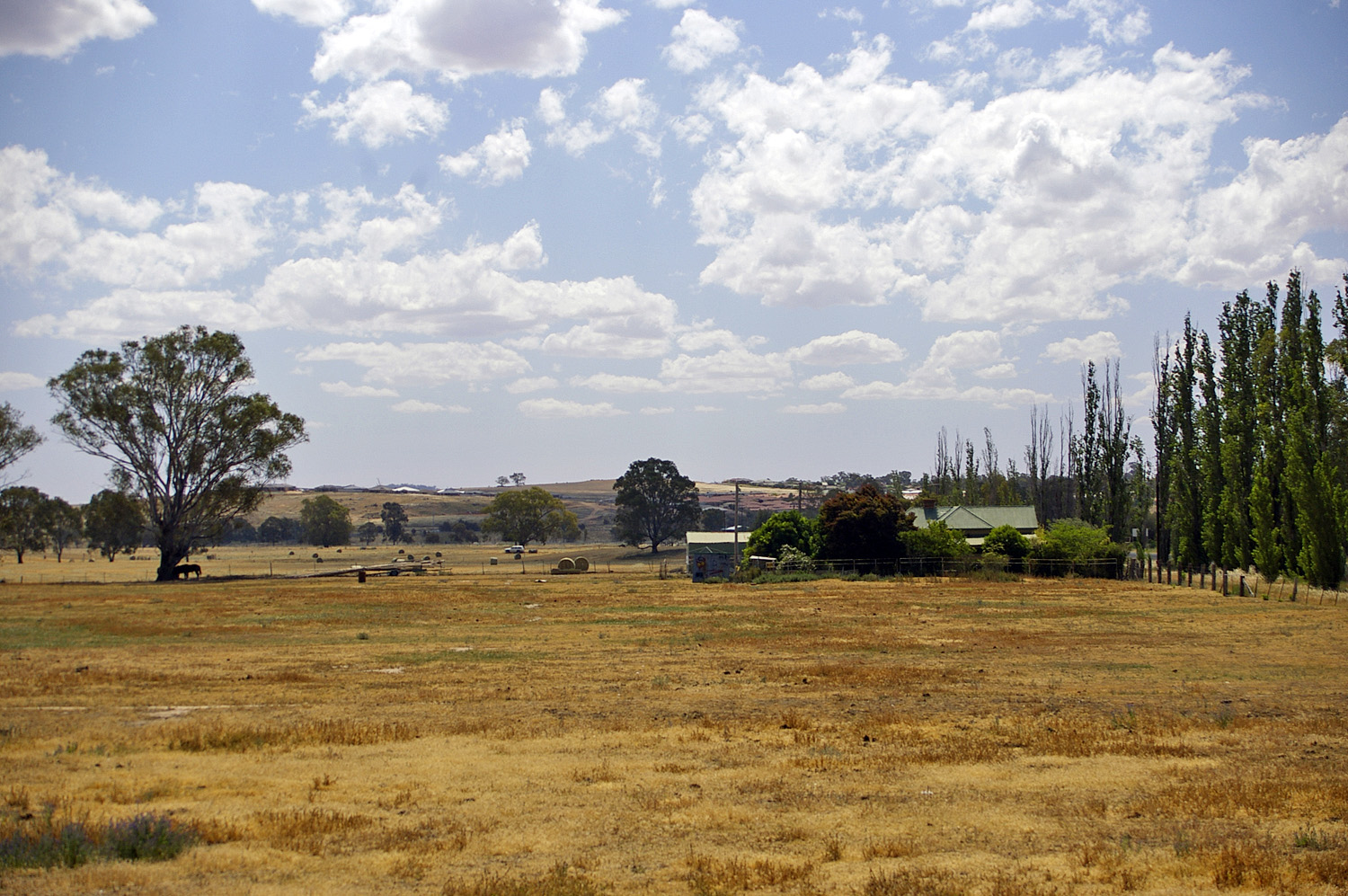
The Riverina also makes the maintenance argument concrete. Hard water, agricultural dust and a unit that sits through winter uncovered will coat pads with scale and grit. Cooling then falls away even on a perfect dry day. Replacing cooler pads is part of living with a machine that drinks untreated air. A pre-summer service in September or October is cheaper than discovering in the first December heatwave that the house will not come down.
Broken Hill and the far west
Broken Hill is the inland case at its most honest. The Line of Lode, the dry air, the summer that does not negotiate: this is desert-adjacent climate, closer in spirit to evaporative cooling in Perth than to anything on the New South Wales coast. Evaporation from the pads is eager. The limiting factors are water, dust, and whether the house can exhaust the moist air without filling with red dirt.
Far-west households already think in litres. Mains water is not an unlimited suburban afterthought. A cooler that bleeds like a leaking tap, or a unit with a dump cycle that nobody has checked, will show up on the bill and in the tank. Keep the bleed in the published range — often 11 to 20 litres an hour on older systems, around 3 litres an hour on some newer ones — and do the bucket test if you are unsure. A half-full bucket in 30 minutes is about 11 litres an hour, the Water Corporation's rule of thumb, and it travels as well in Broken Hill as it does in Perth.
Dust is the other far-west tax. Pads load faster. Filters, if the unit has them, clog. The fan works harder and sounds worse. None of that means the climate is wrong for evaporative cooling. It means the service interval is shorter than a brochure written for a leafy Adelaide suburb would suggest.
Why Sydney is the wrong comparison
Sydney households sometimes treat evaporative cooling as a cheaper air conditioner and then write the technology off. That is a climate error. The coast carries moisture. Wet-bulb temperatures sit high enough, often enough, that the pads cannot dump much heat. You still get a fan. You also get indoor humidity that has nowhere to leave if you have shut the windows against the noise and the mould. The result is the clammy lounge that people remember when they say the machines do not work in New South Wales.
They work in the half of the state that is actually dry. The slopes and the west are not a footnote to Sydney. They are the part of the map where a rooftop cooler is still a rational way to take the sting out of summer. Compare inland NSW with Perth and Adelaide, not with Bondi. Compare a Dubbo January with a Cairns wet season and the ranking writes itself.
There are inland days that behave like the coast. A storm front, a humid easterly that makes it over the range, a southerly change that arrives wet rather than cool: on those afternoons the wet-bulb rises and the pads stop earning their water. Fan-only is the correct setting. So is switching the system off and opening the house if the change is actually cool. Bushfire smoke is a hard stop. The unit is designed to pull outdoor air through the pads and into every room. Smoke comes with it. Close the system and wait.
How to run one on the slopes and plains
Treat the cooler as weather equipment, not a set-and-forget appliance. Wet pads on dry heat. Fan-only when the air turns sticky. Windows open on the exhaust side. Ceiling vents open in summer, closed and covered in winter so the roof is not a hole. Do not run the machine as a default from November to March. Run it when the outdoor air will take water.
Portable units still have a place in a rented house or a single west-facing room, up to about 25 square metres if the room can exhaust air. A wall or window machine covers something in the 30 to 50 square metre range. Ducted kit is the whole-house answer that already sits on thousands of inland roofs, sold in this country under names such as Bonaire, Braemar from Seeley International, and Climate Technologies. The cabinet matters less than the climate, the pads, and whether someone still knows where the bleed hose goes.
Inland New South Wales does not need a new theory of comfort. It needs the old one applied in the right postcodes: dry air, open house, wet pads, and the discipline to shut the water off when a humid change comes over the range.
Frequently asked
- Does evaporative cooling work in Dubbo or Wagga Wagga?
- Yes, on the dry, hot days that define most inland summers. Keep windows open, wet the pads, and switch to fan-only when a humid change arrives from the coast or a storm cell.
- Why is evaporative cooling a poor fit for Sydney?
- Coastal humidity lifts the wet-bulb temperature, so evaporation from the pads cannot pull much heat out of the air. The house then fills with moisture that has nowhere useful to go.
- How much water does a ducted cooler use in inland NSW?
- NSW Planning cites about 10 to 30 litres an hour depending on size and humidity, plus bleed-off. That is far less than a hard Perth afternoon, but it is still a real water cost on a long January run.
More from Climate

Climate · 26 May 2025
Humidity, wet-bulb temperature and fan-only mode
When outdoor air is already holding water, wet pads stop cooling and start humidifying. Kill the pump, feel the change, and wait out a storm-front afternoon.
Climate · 12 May 2025
Evaporative cooling in Queensland: dry inland versus the coast
Longreach, Roma and Toowoomba can still justify a wet-pad cooler. Brisbane, Cairns and the wet-season coast generally cannot.

Climate · 14 April 2025
Evaporative cooling in Melbourne and inland Victoria
Melbourne’s climate is marginal for a wet pad; Shepparton, Mildura and Bendigo still use them because the inland northerly is a different air mass from a humid south-easterly on the bay.