Asthma, allergies and living with an evaporative cooler
Fresh washed air helps some households. Damp pads, mould and mineral dust help no one. This is a maintenance and shutdown guide, not medical advice.
Published 13 October 2025 · Updated 3 February 2026
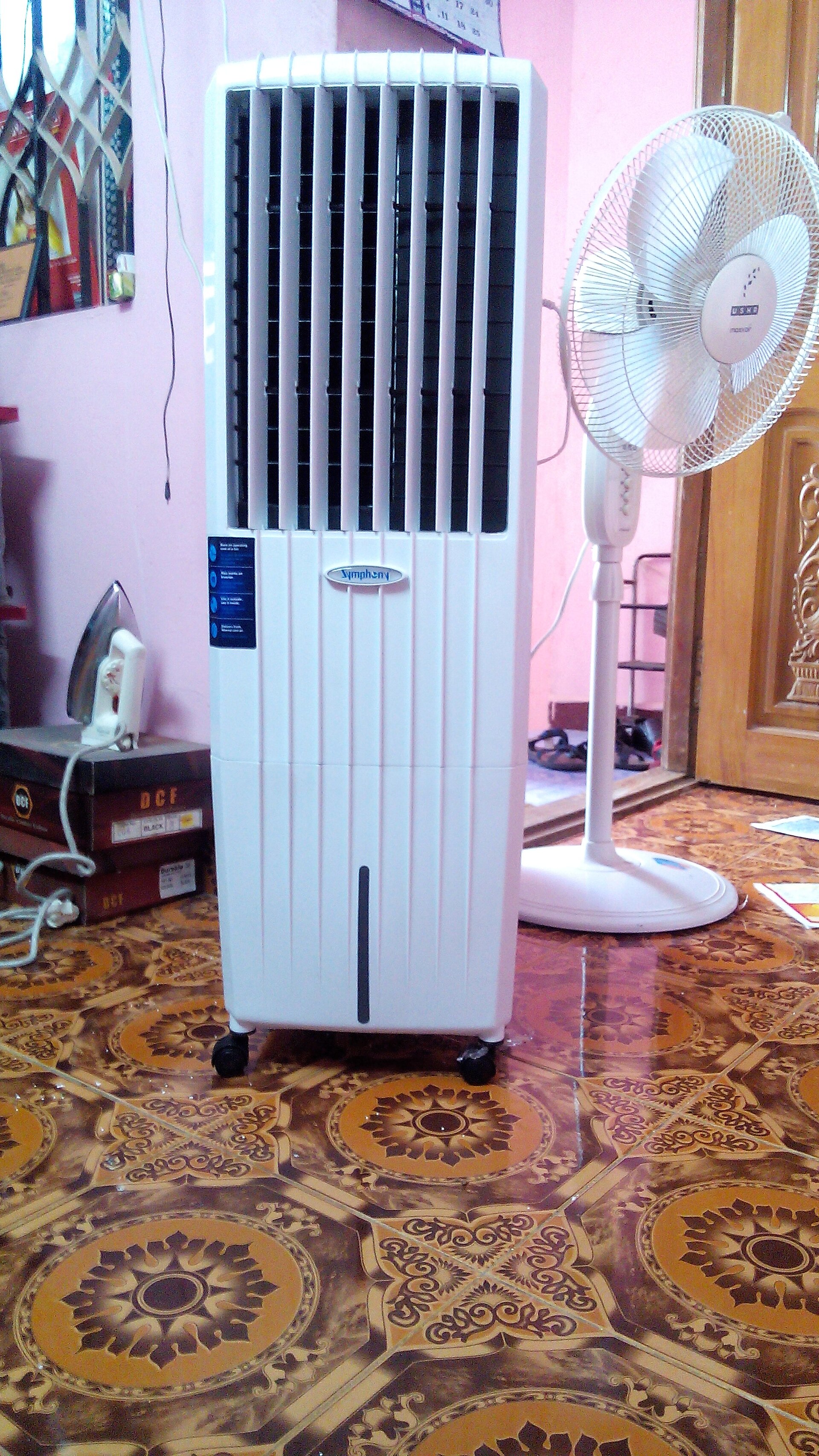
This is not medical advice. It will not tell you whether your asthma is “the cooler” or the rye grass, and it will not rank a Braemar against a preventer. What it can do is describe the machine in the terms lungs actually meet: a continuous stream of outdoor air, washed through a wet pad that is either clean or is not.
Some households sleep better under evaporative cooling than they ever did in a sealed reverse-cycle box. Some households start coughing in November and stop when the unit is isolated. Both can be true, because the cooler is not one exposure. It is outdoor air, water, fibre, and whatever has been allowed to live in the tray.
What the air is doing to a sensitive room
A working ducted cooler is a ventilation system. Outdoor air comes through wet pads and leaves through windows. For a person who does badly in stale, overheated rooms, that exchange can be the whole benefit. The air is cooler, it is moving, and it is not the same air they have been breathing since breakfast.
The same stream is a problem if the outdoor air is the trigger. Pollen counts, dust, smoke, a neighbour’s burn-off — the cooler will not refuse them. Fresh air and indoor air quality is the general version of that fact. For asthma and allergies the practical reading is simpler: if the verandah would make you wheeze, the ceiling outlet will too.
Humidity is the third variable. Evaporation adds moisture. In a dry inland afternoon that moisture is what makes the heat liveable. In a house with windows shut, or on a muggy change, the extra water sits. Some people find moist air easier; some find it worse. The machine does not know which you are.
Damp pads are a health object
The pad is meant to be wet while the pump runs and to dry when you shut the water off. A pad that stays sodden in a dark cabinet, over a tray of warm water, is a growth surface. Mould and bacterial films are not a theoretical risk in that climate. They are what happens to wet cellulose that nobody looks at.
The household test is still the lid. If you smell pond, cellar or sour cloth when the cooler starts, do not “see if it clears”. Isolate the power, open the unit, and look. Black or green films, slime in the troughs, pads that smear — those are finished pads and a dirty tray. Running them to “dry the smell out” is how you decorate the ducts.
Replacement is the remedy, not a scented additive in the tank. When and how to replace pads is the workshop essay. For a sensitive household, replace on the early side of the one-to-three-summer cycle, and do not store last year’s pads “for a spare”.
Portable coolers deserve less poetry. The tank is in the room. If it smells, the room smells. Empty it, dry it, and treat the pad as a consumable. Do not run a portable in a closed bedroom as a night-long experiment.
Mineral dust and the white film
Hard water leaves minerals behind when it evaporates. On the pad that is scale. In the airstream, when a glazed pad starts to break up, it can be a fine white dust on the hall table. People notice it as housework. Lungs may notice it as irritation.
Bleed-off exists to slow that concentration. A bleed around the Water Corporation’s bucket check — half full in 30 minutes, about 11 litres an hour — is ordinary on older machines. Newer systems can run nearer 3 litres an hour. A bleed pinched shut to save water will spend the saving on scale and dust. Water quality, scale and bleed-off is the place to set that correctly.
If furniture near outlets is filming white after a week of use, the pads are late. Replace them, clean the tray, and check that the distributor is wetting the whole face. Dust that is already in the ducts will take a few runs to clear. That is annoying. It is still better than another month of grit.
Mould in the house, not only on the roof
An evaporative cooler can contribute to indoor damp if the air cannot leave. Moisture that should have gone out the window condenses on the cold side of a wardrobe, in a south bathroom, behind a full bookcase. Mould in those places is a building problem with a cooler as the humidity source.
The fix is the same as the comfort fix: open a path out, do not run the water on humid days, and do not treat the machine as a 24-hour background process. Older units without a useful thermostat will happily humidify until someone remembers the switch.
If you already have a mould problem, running the cooler harder will not dry the house. It is not a dehumidifier. Reverse cycle in cooling mode removes moisture from sealed air; evaporative cooling adds it. Choosing the wrong machine for a damp week is how bathrooms stay wet.
When to stop
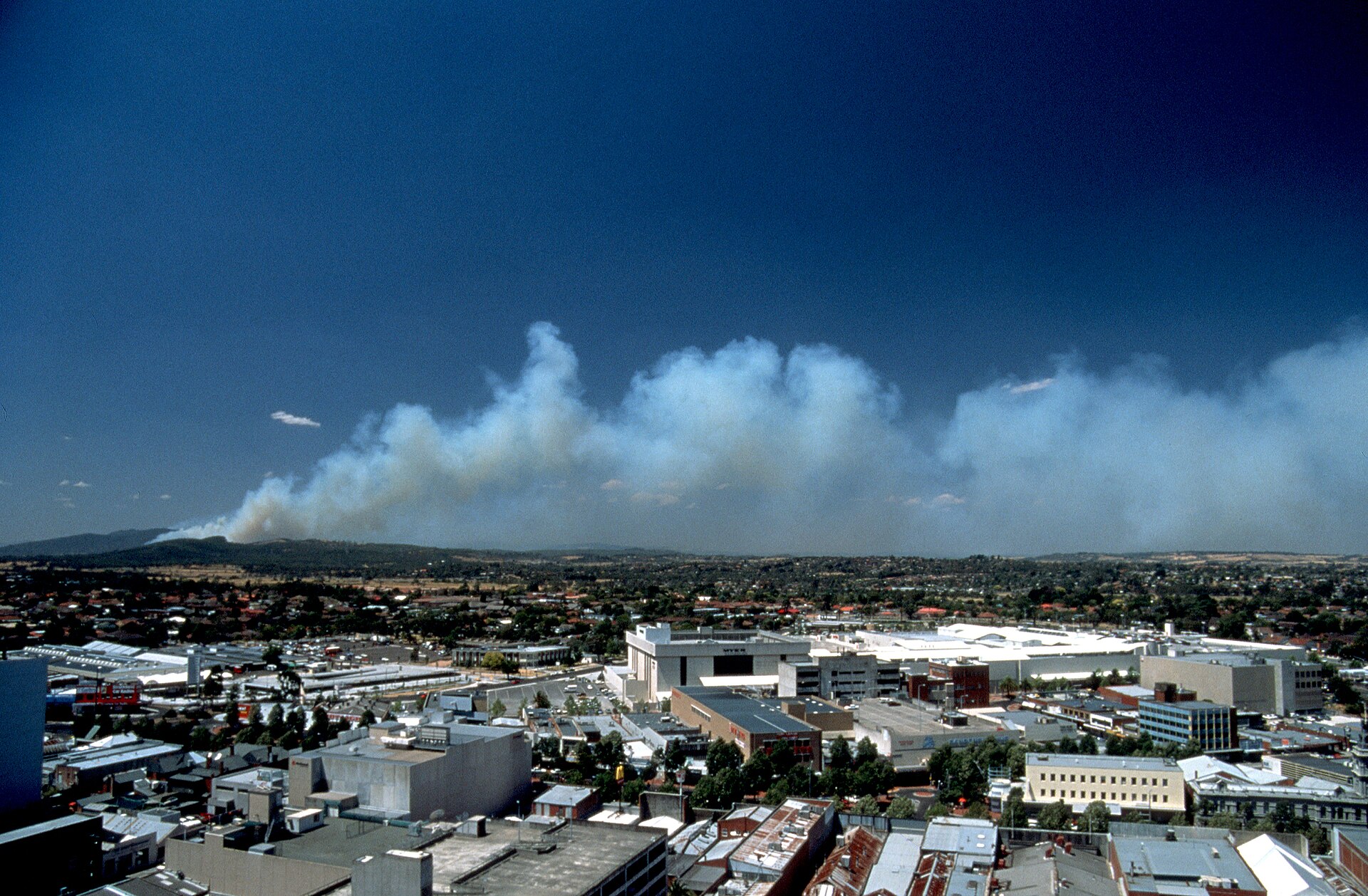
Stop for smoke. Public guidance is unambiguous: do not draw bushfire smoke indoors. The shutdown sequence — power, water, vents, recovery — is in bushfire smoke and evaporative coolers.
Stop if the machine smells of mould and you have not yet cleaned it. Comfort is not worth aerosolising a tray.
Stop, or switch to fan-only, when your own pattern is clear: symptoms start when the cooler starts and ease when it is off, on days when the outdoor air is otherwise fine. That pattern is worth taking to a clinician. It may be the pads, the dust, the humidity, or something the cooler is stirring in the house. A journal cannot sort that.
Stop the water on humid days even if you feel well. Extra indoor moisture helps neither asthma nor the building.
Do not stop on folklore. “Evaporative cooling is bad for asthma” is too large a sentence. So is “evaporative cooling is good for asthma”. The honest sentence is that a clean system, on a clean dry day, in an open house, is a lot of washed outdoor air; a dirty system, or a smoke day, is a delivery device for the wrong thing.
Living with the machine
Households that do well with both allergies and a cooler tend to be boringly consistent. They service before the first heat, they replace pads before they smell, they bleed the tray, they open the house, and they shut the system down when the outdoor air is hostile. They do not run a portable in a sealed child’s room because the ducted unit is too expensive to put on.
They also keep winter out of the cabinet. A unit left uncovered, dripping into itself through July, is a dark wet box. Cover it, close the ceiling vents, and start November with dry metal and new fibre if last season’s fibre was already tired.
If someone in the house has serious respiratory disease, treat the cooler as a piece of equipment that needs a named person and a date, not as roof furniture. The clinician sets the medical plan. The household sets whether the air coming out of the vent is something that plan can live with.
The pads will not negotiate. They will either be a wet, even, clean face, or they will be a damp archive. Only one of those belongs in a house where breathing is already a job.
Frequently asked
- Is evaporative cooling better for asthma?
- It can be, when the outdoor air is clean and the pads are clean, because the house is receiving a steady wash of fresh air. It can be worse when pads are damp and dirty, when the tray smells, or when pollen or smoke is coming in. That is not a diagnosis. Ask a clinician about your own lungs.
- Can cooler pads cause mould problems?
- Pads that stay wet, sit in stale water, or are left through winter in a dark cabinet can grow films and mould. The smell when you lift the lid is the household test. Replace the pads, clean the tray, and do not run the machine until it smells like wet fibre rather than a pond.
- When should I stop using the cooler for health reasons?
- Stop for bushfire smoke, for a tray or pad that smells of mould, and on days when your own symptoms clearly worsen with the machine on. Switch to fan-only if the problem is humidity, or shut the system and close vents if the problem is what the air is carrying.
More from Health
Health · 27 October 2025
Bushfire smoke and evaporative coolers: when to shut down
Public guidance is blunt: do not draw smoke indoors. Shut the cooler down, close the vents, and treat the pads as contaminated until you have cleaned or replaced them.

Health · 29 September 2025
Fresh air, indoor air quality and evaporative cooling
A working cooler is a whole-house outdoor-air machine. Pads filter some grit and pollen; they do not make a sealed house, and they must not run in smoke.