Bushfire smoke and evaporative coolers: when to shut down
Public guidance is blunt: do not draw smoke indoors. Shut the cooler down, close the vents, and treat the pads as contaminated until you have cleaned or replaced them.
Published 27 October 2025 · Updated 3 February 2026
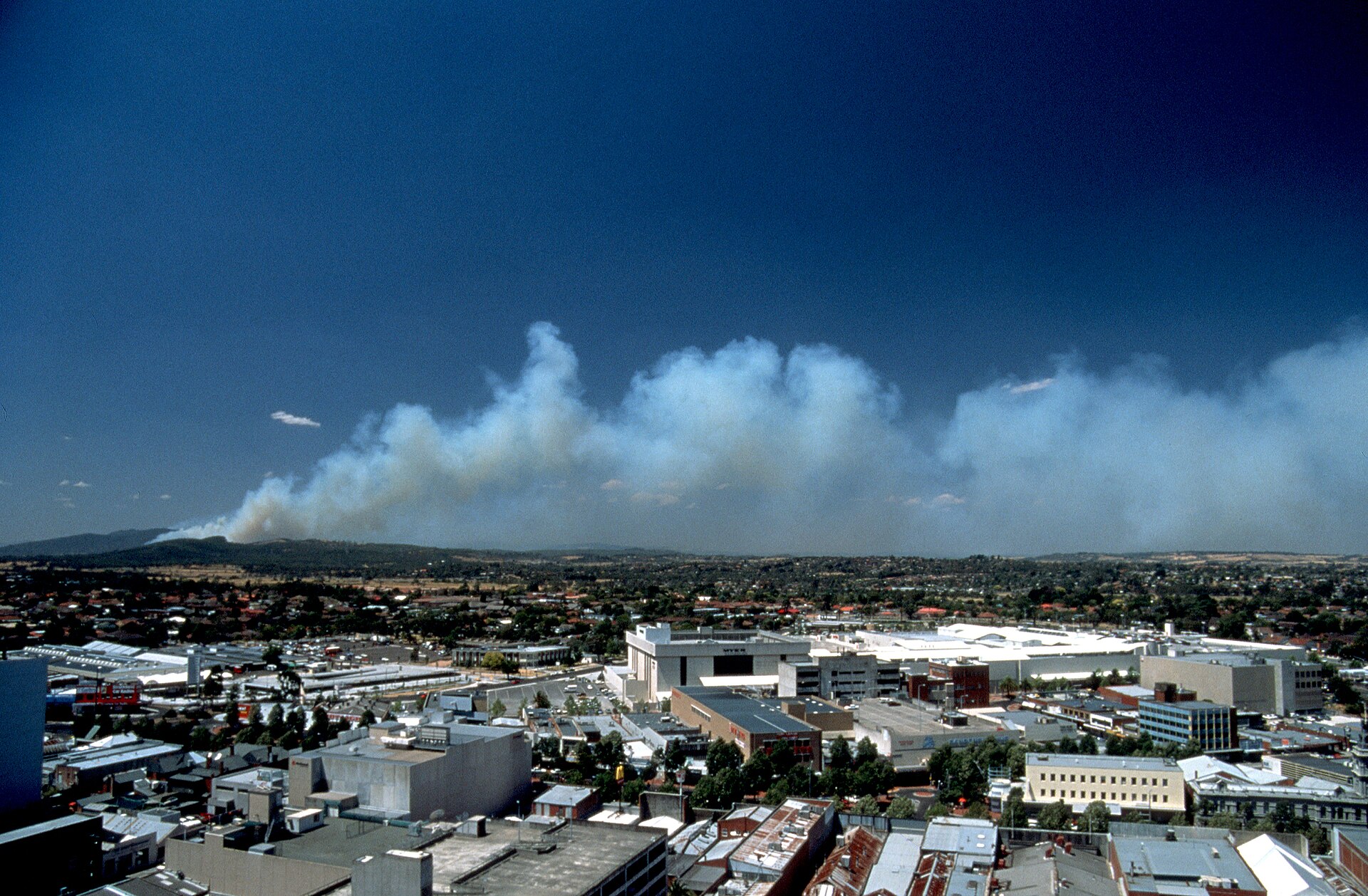
An evaporative cooler is a purpose-built intake. On an ordinary dry afternoon that is the virtue: outdoor air, washed through wet pads, pushed through the house, exhausted out a window. On a smoke day it is the problem. The fan does not know the difference between an easterly off the wheat and a plume from a fire two ranges away. It will draw both.
Sustainability Victoria and other Australian public-health and emergency sources have said the same thing in plain language for years: do not use evaporative coolers during bushfire smoke, because they pull outdoor air inside. The rest of this essay is the household procedure that sentence implies — how to shut the system down, what to do with vents, and how to bring the machine back without serving yesterday’s smoke for dinner.
Why the pads will not save you
Wet pads catch grit and some larger particles. They are not a smoke filter. Bushfire smoke is a mix of fine particles and gases. A cellulose face that can stop a moth will not stop PM2.5. It may hold odour and soot, which then sit in a wet, dark cabinet until you turn the fan on again.
Leaving the cooler on “to filter the air” is a misunderstanding of the machine. You are offering the plume a powered path into every room with an open outlet. A sealed reverse-cycle house, with windows shut and a recirculating system, is the opposite strategy: keep the outdoor air out until the plume moves. Evaporative cooling cannot do that job. It is the outdoor air.
This is also why the usual rule — windows must stay open — reverses for the duration. While the cooler is off and the smoke is on, the house should be closed as far as heat and safety allow. You are no longer running an evaporative system. You are sheltering.
People with asthma or other respiratory disease should treat smoke days as medical weather. The cooler essay on asthma and allergies is about pads and mould in ordinary summer. Smoke is a different exposure. Follow official air-quality advice and your clinician, not a rooftop habit.
How to shut the system down
Do it as soon as the air smells of smoke or the official apps say the particle count is up, not after the lounge has filled. The sequence is ordinary and it is worth doing in order.
Switch the cooler off at the controller, then isolate it at the isolator if you can reach it safely. You want the fan stopped. A fan that is “just on low” is still an intake.
Turn the water off. There is no benefit in keeping pads wet under a smoke plume. Wet fibre will hold smell. If the machine has a drain or you can empty a portable tank, do that when it is safe. Do not climb a roof in thick smoke or high wind to win a tidy tray.
Close the windows and doors you had opened for exhaust. The exhaust path was for moist clean air. It is now a smoke path.
Close ceiling vents if the outlets have dampers or you have the old-style caps. A still duct with an open grille is a chimney in reverse: smoky air drifts, the house stack effect does the rest. You will not get a laboratory seal. You will get less of a hole.
If you have a winter cover and it is safe, daylight, and not blowing embers, covering the rooftop unit reduces the cabinet’s role as an open box. If any of those conditions fail, leave the cover in the garage. A fall or a cover that becomes an ember trap is a worse outcome than a slightly more open cabinet.
Portable and window coolers are simpler. Unplug them, empty the tank, close the window they sat in.
Heat without the cooler
A shutdown on a 40-degree smoke day is miserable, and it is still the right miserable. The cooler cannot be asked to solve both problems at once.
Use the building. Close west curtains. Keep blinds down on the sun side. If you have reverse cycle, this is the day it earns the registration. Recirculate, do not run “fresh air” modes that open a damper to the roof. A portable HEPA filter in one room is a sealed-house tool; it is not a substitute for turning the evaporative unit off.
Drink water. Check on people who should not be in a hot closed house. If official advice is to leave for a cooler, cleaner building, leave. A journal about pads is not an evacuation plan.
Night can be better or worse depending on the fire and the wind. Do not reopen the house because the clock says ten. Reopen when the air is actually cleaner.
Recovery after a smoke day
The plume moves. The pads do not. When outdoor air-quality advice says it is acceptable to ventilate, do not restore last week’s settings by reflex.
Look at the pads before you run the pump. If they smell of fire, look sooted, or have a grey film, treat them as contaminated media. A gentle rinse may lift loose soot from a pad that was otherwise new. A pad that was already tired, scaled, or smelly should be replaced; you were near a pad change anyway. Do not wash smoke into the ducts “to air the house out”.
Clean the tray. Ash and grit settle. A pump that chews soot will distribute it.
Then ventilate the house with windows, not with the cooler, until the rooms smell like outdoor air again rather than like a fireplace. After that, a short fan-only run with water off and windows open can move residual air through clean pads. If the outlets still smell of smoke, stop and go back to the cabinet.
Ceiling vents can open when the system is ready to be a system again. If you covered the unit, uncover it before you ask the fan to pull against a tarp.
Ordinary maintenance after a bad smoke season may need to come forward. Belts and bearings do not care about fires. Pads and trays do.
What not to do
Do not run the cooler on fan-only thinking that dry pads will filter smoke. Dry pads are not HEPA either, and the fan is still an intake.
Do not add household chemicals to the tray to “neutralise” smoke. You will add a new indoor-air problem.
Do not trust the colour of the sky alone. Some of the worst particle days look merely dirty. Use the official index for your town.
Do not leave a portable running in a child’s room because the rest of the house is shut. That portable is drawing from wherever it can, including under the door from a smoky hall, and it is humidifying a closed space.
Do not wait for the unit to “sound wrong”. Smoke is quiet.
After the summer of fire
Households in fire country already know the rhythm: listen, close, wait, open. The cooler has to join that rhythm. It is not a special case that gets to keep running because the rooms are hot. It is the largest hole you can turn on with a wall switch.
The rest of the year, the same machine is how a dry-climate house stays liveable without sealing itself. That is the subject of fresh air and indoor air quality. Smoke days are the exception that proves the airflow. When the outdoor air is worth having, use the pads. When it is not, shut them down, close the vents, and let the fire pass without an invitation into the hallway.
A cooler that can be turned off is a safer machine than a habit that cannot. The plume does not care which one you own.
Frequently asked
- Should I run an evaporative cooler during bushfire smoke?
- No. The unit is designed to pull outdoor air through wet pads and into the house. Smoke comes with it. Sustainability Victoria and other public agencies say to switch evaporative coolers off and follow local air-quality advice.
- What do I do with ceiling vents during a smoke day?
- Close them if you can, along with windows and doors, once the cooler is off. An open vent over a still duct is a path for smoky air to drift down. Cover the rooftop unit if you already have a winter-style cover and it is safe to fit.
- Can I start the cooler again as soon as the sky looks clearer?
- Wait until official air-quality advice says outdoor air is acceptable, then inspect the pads. If they smell of smoke or look sooted, clean or replace them before you wash that air into the house. A short fan-only flush with windows open can follow a clean pad, not a dirty one.
More from Health
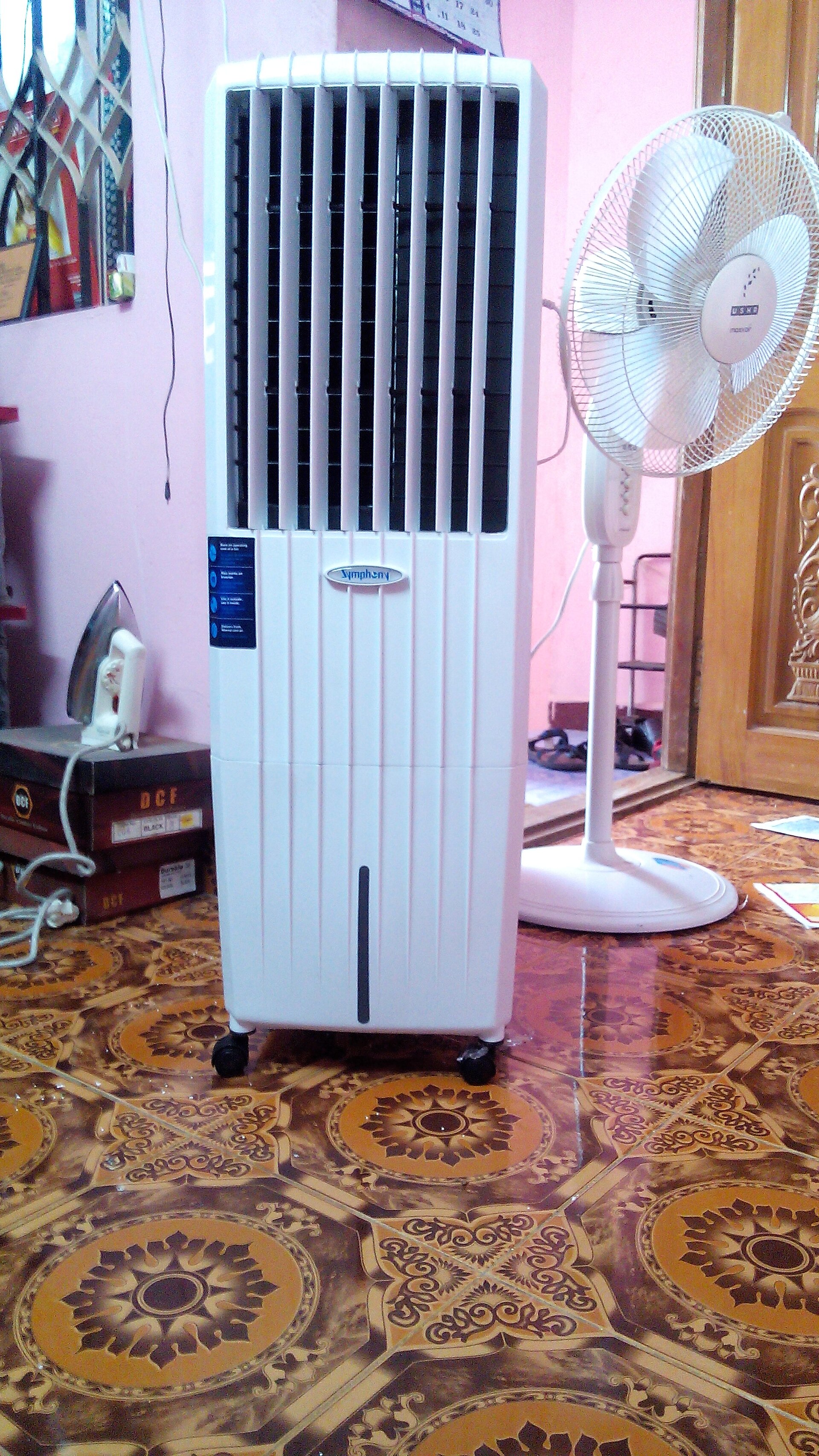
Health · 13 October 2025
Asthma, allergies and living with an evaporative cooler
Fresh washed air helps some households. Damp pads, mould and mineral dust help no one. This is a maintenance and shutdown guide, not medical advice.

Health · 29 September 2025
Fresh air, indoor air quality and evaporative cooling
A working cooler is a whole-house outdoor-air machine. Pads filter some grit and pollen; they do not make a sealed house, and they must not run in smoke.