Why evaporative coolers need open windows
The cooler is an intake. Windows are the exhaust. Close them and you have built a humidifier with a loud fan and no way for the moisture to leave.
Published 18 November 2024
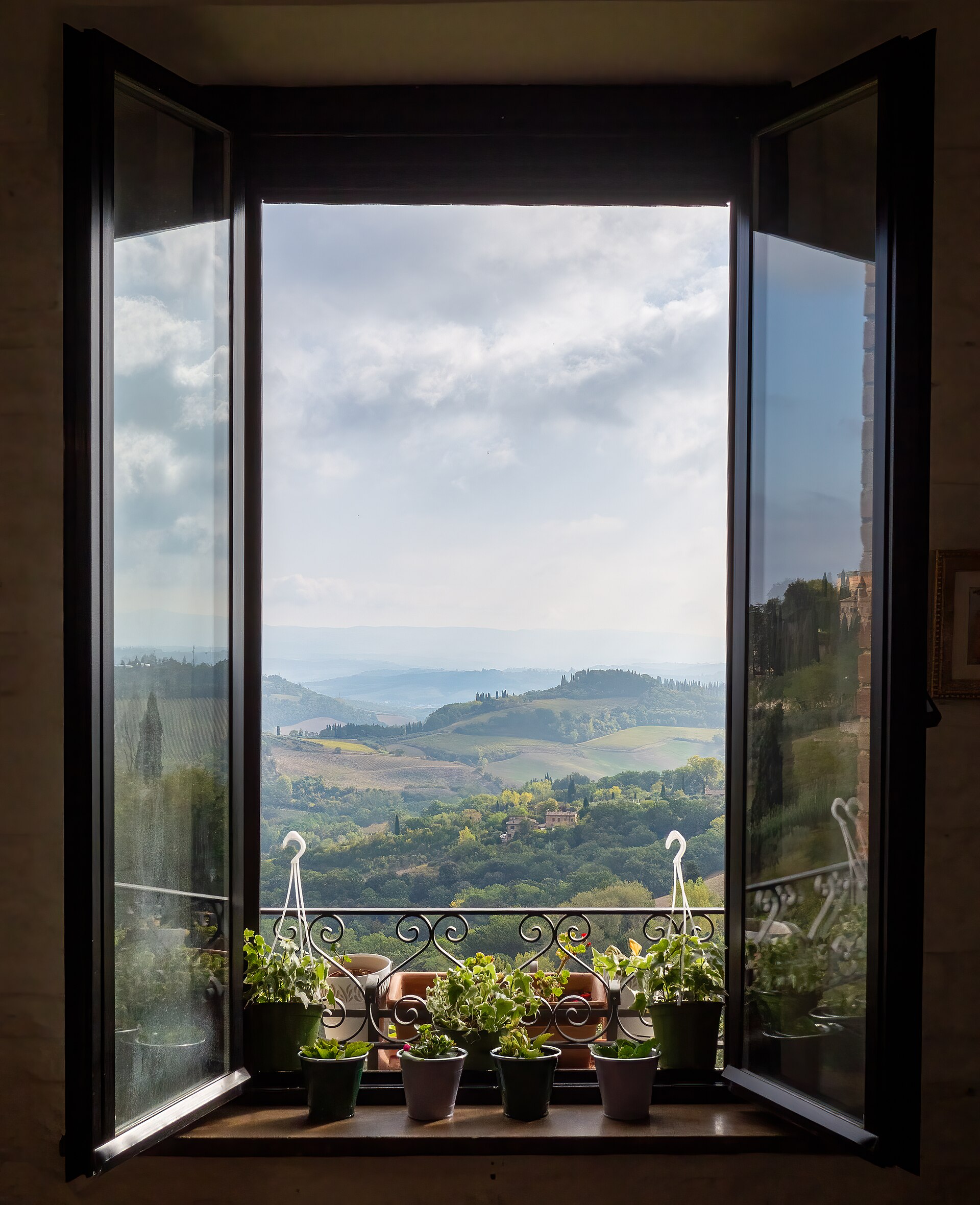
The most common way to ruin a good evaporative cooler is to treat it like a reverse-cycle split. Windows closed, doors closed, hallway vents pouring air into a box with no outlet. The unit keeps adding moisture because that is what the pads do. The moisture has nowhere to go. Relative humidity climbs. Evaporation at the pad slows because the whole house is heading toward saturation. People say the system “stopped working”. It is working. It is working as a humidifier.
Open windows are not a comfort preference and they are not a relic of how your parents lived in 1988. They are the other half of the appliance.
The exhaust path is part of the machine
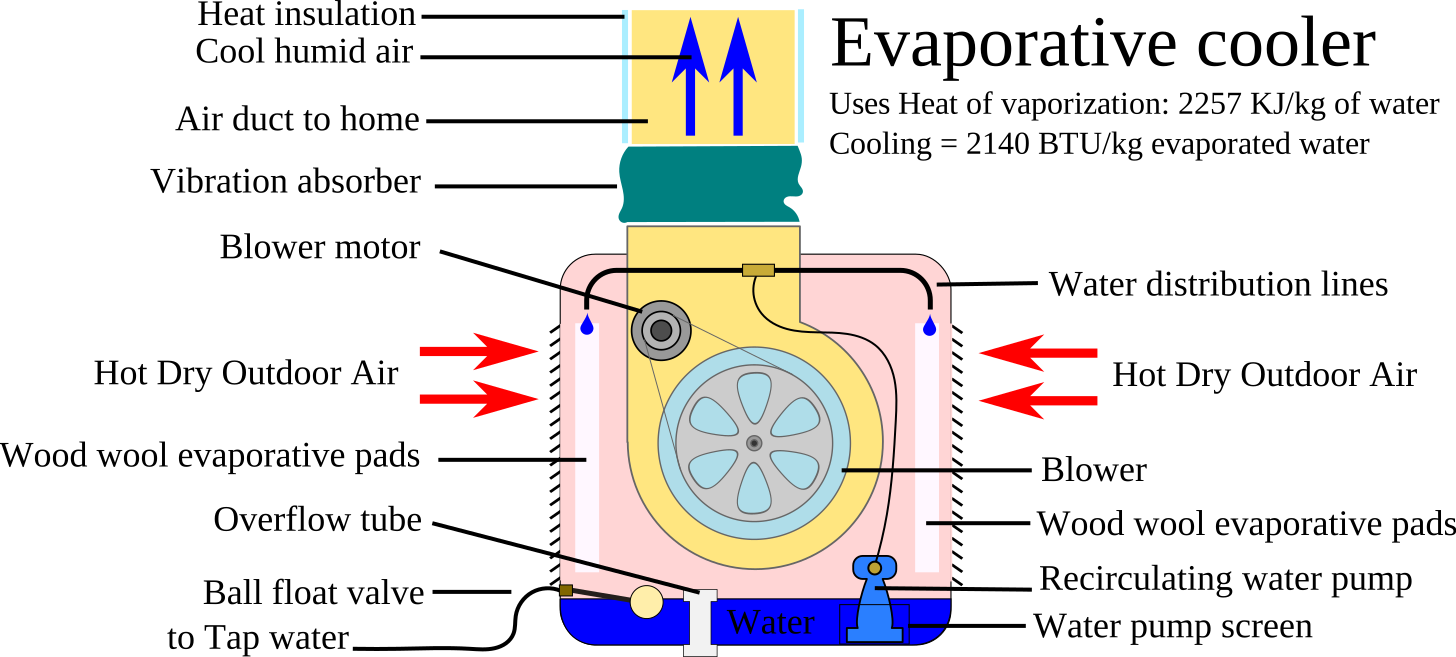
A ducted evaporative cooler delivers a large volume of outdoor air into the ceiling vents. That air has to leave. If it does not, two things happen, both unhelpful. Pressure in the house rises until the fan is pushing against itself through whatever leaks the building has — downlight holes, the laundry vent, the gap under the front door — and the designed airflow through the pads falls. At the same time the indoor air gets wetter, which is the opposite of the dry outdoor air the pads were counting on as a sink for vapour.
You want a path: pads to ducts to rooms to openable windows or doors to outdoors. The last step is as engineered as the first, even if the “engineering” is a timber sash and a flyscreen.
How much opening? Enough that the house does not feel pressurised and the air at the windows is clearly moving out on a hot afternoon. Installers talk in terms of matching relief area to supply airflow. Households can start simpler: in each occupied room, create an obvious way out, and do not expect a bathroom window the size of a tea towel to relieve a whole living area.
Closing a bedroom because nobody is in it is fine. Closing every bedroom, the lounge, and the kitchen because you once heard that cold air escapes is how you cook the pads in their own steam.
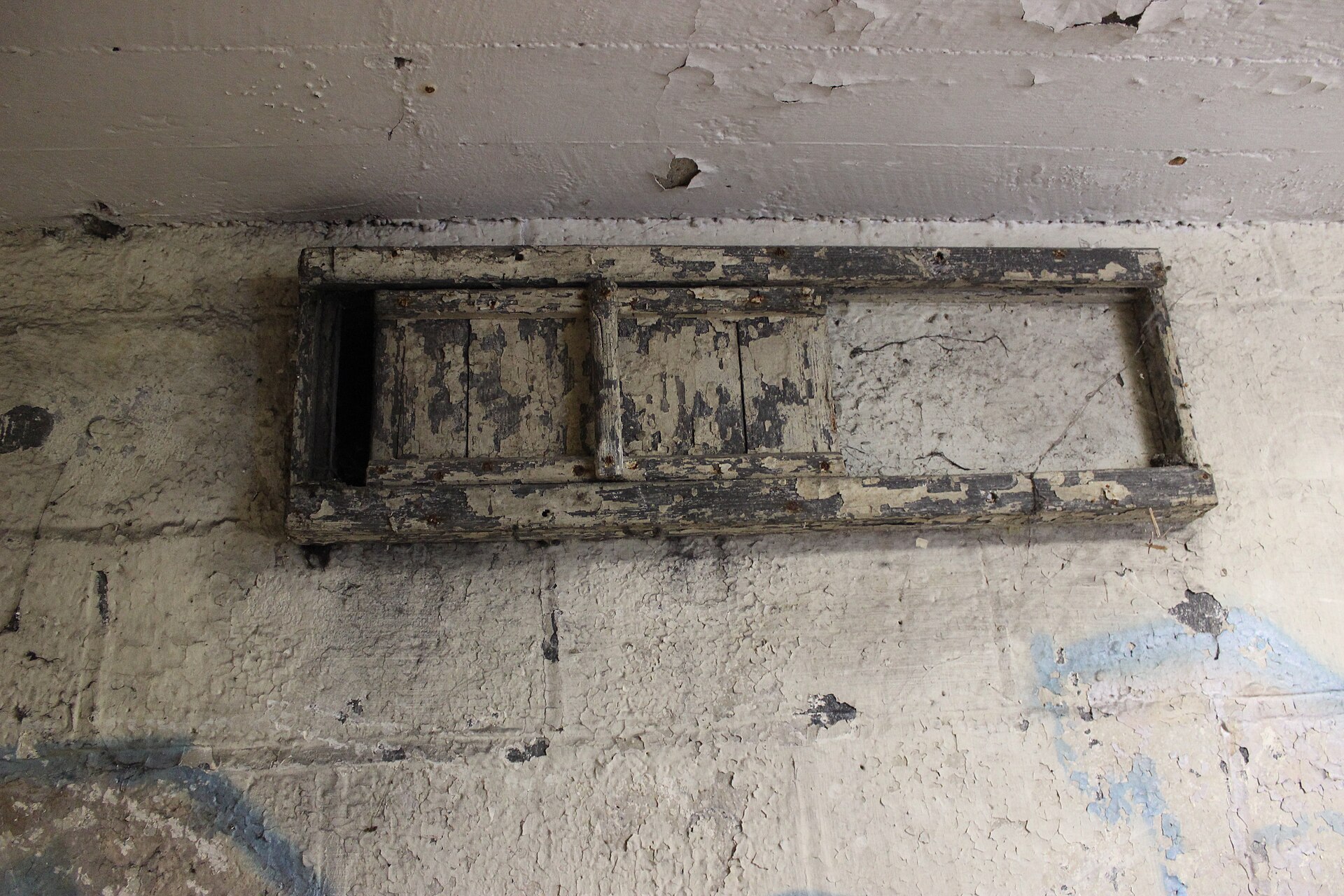
Which windows to open
Open the rooms you are using. There is no prize for cooling the spare room’s wardrobe while the kitchen swelters with the window latched.
Prefer the leeward side — the side the hot wind is not punching into. If a northerly is loading the front of the house with outdoor air at forty degrees, opening those front windows turns the breeze into a competitor for your cooler. The unit is trying to fill the house with air that has been through the pads. A windward opening fills it with air that has not. You feel a hot jet at waist height and assume the cooler has failed.
Downwind, shaded, or south-facing openings (in much of southern Australia) are usually the better relief. A window under an eave beats a window in full sun. A window with a flyscreen and a security grille is still an opening. A window painted shut in 2004 is not, however photogenic the lace curtain.
Bathrooms and laundries can be useful dump rooms if they have windows or vents, but they are not a substitute for living-area relief. If the only open window is at the far end of a passage, the living room may still be stagnant. Think of the air as a river that has to run through the occupied floor, not as a smell you hope will find the exit.
Internal doors matter. A closed door to a room with an open window turns that room into a private exhaust chimney and can starve the rest of the house. A closed door to a room with no open window just creates a hot cupboard. Walk the path.
Prevailing hot winds
Australian summers come with directional heat. Perth’s easterlies, Adelaide’s northerlies, a north-westerly across inland Victoria, the long dry wind that makes the washing horizontal. Those winds are outdoor air at the worst temperature of the day, often carrying dust.
Use the cooler as the controlled intake on those afternoons. Keep the windward openings small or shut, and give the air a leeward way out. You are not trying to “catch the breeze” in the romantic verandah sense. You are trying not to short-circuit a machine that has already paid, in water, to condition a stream of air.
If the wind is so strong that it overwhelms any indoor strategy, the house is in a weather event, not a cooling debate. Shade, close the worst openings, run the evaporative unit only if it is still clearly delivering cooler air at the grille, and do not add mystery to a northerly by blaming the pads.
At night the wind story changes. A cool change can make outdoor air better than anything the pads will do. Then the windows are for the change, and the cooler can go to fan-only or off. That is not inconsistency. That is refusing to evaporate water into air that is already doing you a favour.
Condensation, clamminess, and the closed-house failure
When moist supply air hits a cold surface — a slab that has not yet warmed, a south-facing window at night, an uninsulated wardrobe wall — water can condense. In a properly exhausted house this is uncommon in the dry climates evaporative cooling is good at. In a shut house it is a reasonable outcome. You have raised indoor dew point. Cold glass will find it.
Clamminess is the human version of the same reading. Skin does not evaporate sweat well into already-humid air, so you feel warmer than the thermometer suggests. People turn the fan up. The unit adds more moisture. The loop is ugly and entirely optional.
Mould is not an automatic consequence of evaporative cooling, and this is not a medical article. Stagnant, wet indoor air against cold corners is a mould story in any house, refrigerated or not. Exhaust the air. Keep pads and ducts from becoming biology experiments. If a room smells like a wet dog and the windows have been locked for a week of “cooling”, the diagnosis is not subtle.
On humid days, stop adding water. Fan-only, or off. The open-window rule does not mean you must humidify. It means that when the pads are wet, the vapour has to leave.
Night-time strategy
Nights are where households fight the open-window rule hardest. Security, noise, mosquitoes, a baby, a shift worker, a street light. Those are real constraints. They do not repeal psychrometrics.
If you can open high sashes, lockable security windows, or a screened raked-ceiling pane, do that. High openings dump air without giving the street a waist-height invitation. If you cannot open anything, evaporative cooling is the wrong night tool. A bedroom reverse-cycle split exists for this exact disagreement between physics and the lock on the window.
A common pattern in dry inland towns: run the ducted evaporative system through the afternoon with relief openings managed against the wind; at night, drop to fan-only or off if the outdoor air has cooled, and sleep with selected screened windows open; if the night stays hot and still, keep the cooler on but do not seal the bedrooms. Another pattern: evaporative for the house by day, splits for sleep. Both are coherent. Sealed-room evaporative at 1am is not.
Insects are a flyscreen problem, not a reason to shut the system’s exhaust. Rain on the windward side is a reason to choose different openings, not to close the lot and keep the pump running.
Smoke, and other days you should not open the house
The open-window rule assumes outdoor air you are willing to live with. Bushfire smoke is the hard stop. Switch the cooler off, close up, and do not pretend a wet pad is a filter. The same logic applies to a severe dust storm or a chemical smell you would not otherwise invite in.
Those days are when households discover whether they have a fallback. If the only cooling you own is a ducted evaporative unit, smoke weeks are uncomfortable. That is a planning fact, not an argument for running the unit anyway.
The rest of a dry summer, the windows are not a lifestyle. They are the flue. Open them on the right side of the house, in the rooms you occupy, wide enough that the air has a job. The pads will do theirs.
Frequently asked
- How many windows should I open with a ducted evaporative cooler?
- Enough to let supply air leave as fast as the unit is delivering it, which in practice means openings in the rooms you are using, preferably on the side away from a hot prevailing wind. A single cracked window in a four-bedroom house is not an exhaust path. It is a gesture.
- Should I open windows on the side the hot wind is coming from?
- Usually no. Let the cooler push air out on the leeward side so you are not fighting a forty-degree northerly pouring in at head height. Use the machine as the intake and the shaded, downwind openings as the relief.
- Can I run the cooler at night with everything shut for security?
- Shut rooms trap humidity and stall the cooling. If security is the constraint, open high, lockable, or screened sashes that still dump air, or accept that evaporative cooling is the wrong tool for a sealed night and use a bedroom reverse-cycle unit instead.
More from How it works
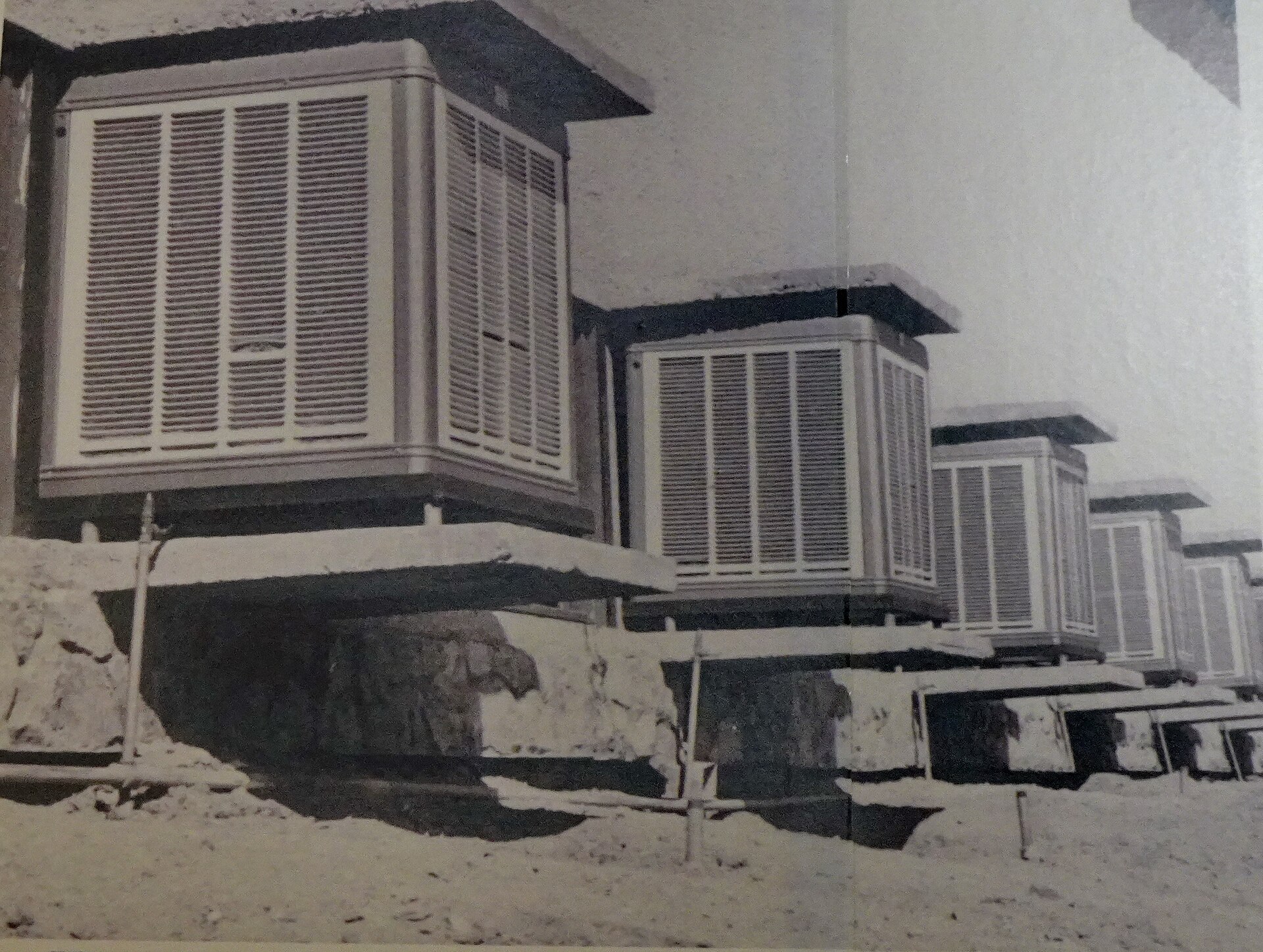
How it works · 5 November 2024
Direct versus indirect evaporative cooling
Direct systems wet the air you live in. Indirect and two-stage machines keep moisture out of the supply stream and chase a lower limit, at a price most Australian houses still will not pay.
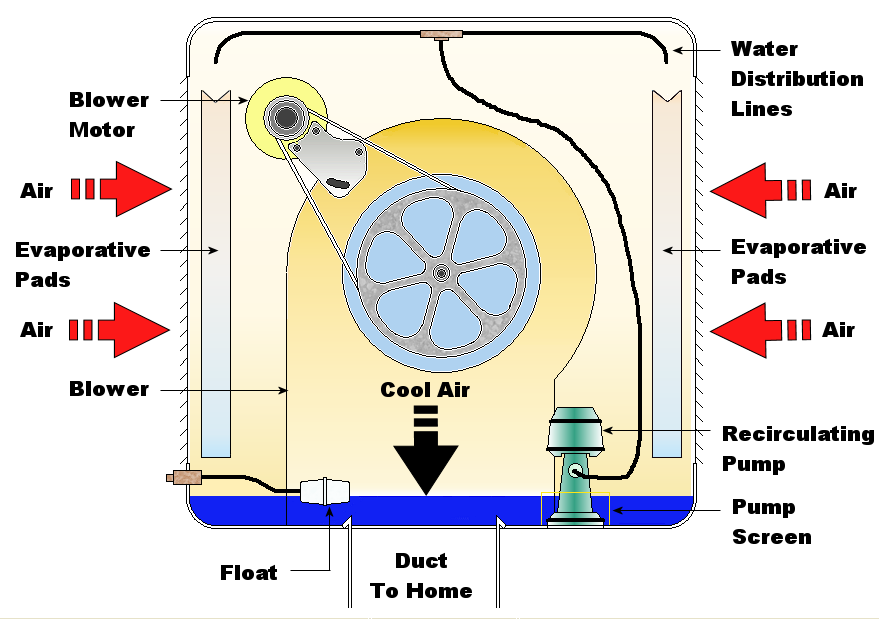
How it works · 22 October 2024
Evaporative coolers versus reverse-cycle air conditioning
One machine opens the house and adds moisture. The other seals it and wrings moisture out. Climate, smoke, water and winter decide which one you actually want.
How it works · 8 October 2024
How evaporative cooling works in an Australian house
A ducted evaporative cooler is a wet-pad weather machine: outdoor air, latent heat, a rooftop fan, and an open house that has to let the moisture leave.